
It may take an innovation network to nurture each startup, but often there is a particular element prepping the company for success. For the Beehive State, one of these is located at the University of Utah's Technology Licensing Office (TLO). From here, the startup Eyescreen, Inc., which is developing a platform for testing drugs that could potentially save pharmaceutical companies millions of dollars in clinical trials, has been introduced to entrepreneurship support organizations throughout the region. “The TLO can't do it all, but we can create an ecosystem where we bring all of the right people and all of the right capabilities to one place,” said Kyrsten Woolstenhulme, director of innovation management for the TLO.
Eyescreen is a spinoff from the University of Utah’s Moran Eye Center. Frans Vinberg, PhD, chief scientific officer of Eyescreen, has been on the faculty there for eight years. He published research results in Nature in 2022 that would lead to the creation of Eyescreen. The research paper received significant media attention and an inquiry from the TLO. “They were excited about what we were doing and contacted us," he said. “That was the initial push for us to start to think about commercialization.”
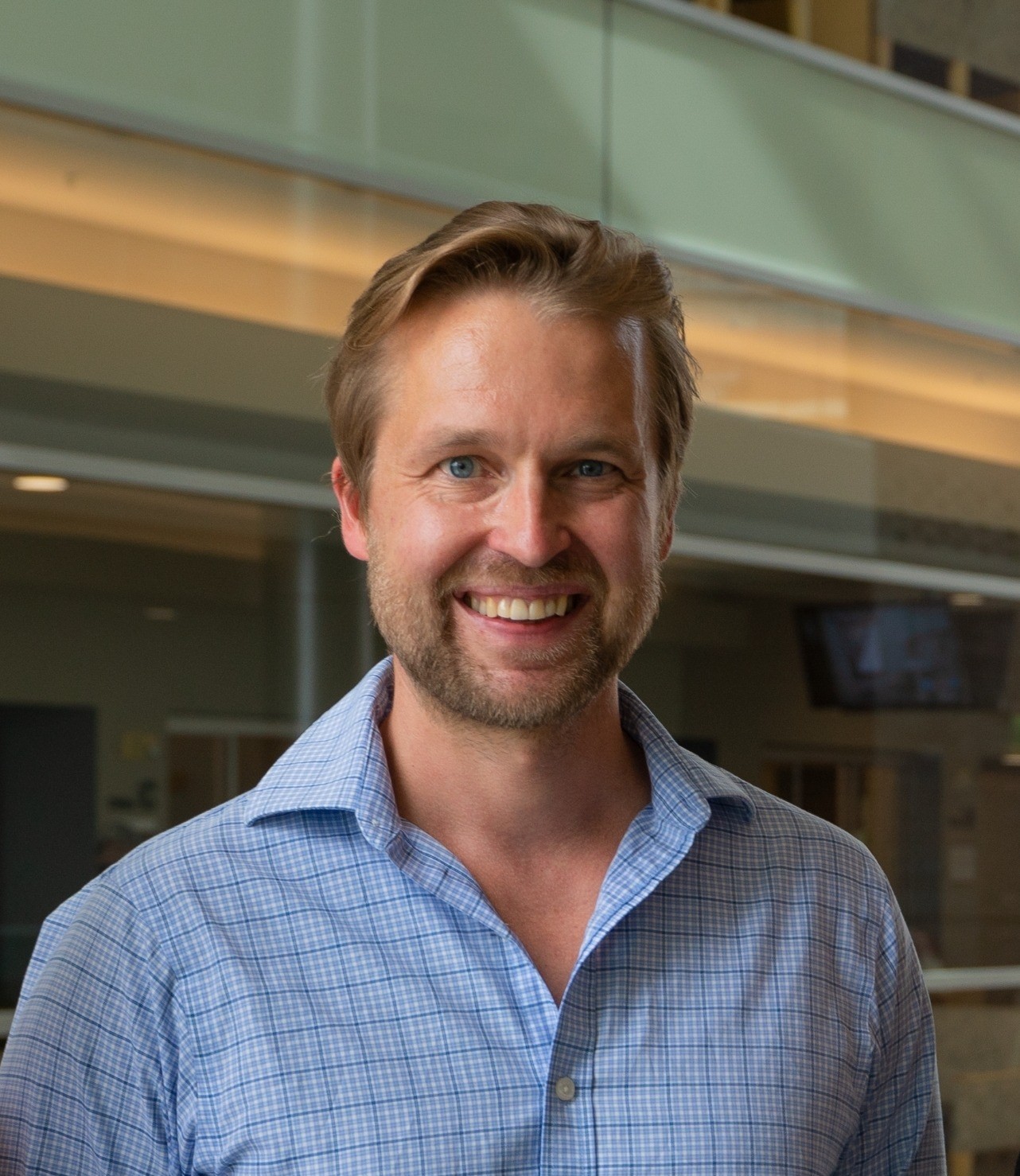
Frans Vinberg, PhD, Chief Scientific Officer, Eyescreen Inc.
Eyescreen is developing technology to test drugs for treating diseases, such as ischemia and macular degeneration. However, instead of using animal models (mice) to test these drugs, it is using donated human eyes. Vinberg notes that mice are nocturnal animals and do not have the fovea or the macula, which humans use for reading, driving, and recognizing faces, making them poor models for testing drug treatments for humans.
However, using human eyes creates other challenges. Eyescreen needed to create new infrastructure, protocols, and technologies to recover these eyes during organ donations and then keep, revive, and preserve the light responsiveness in these eyes so that they would continue to respond to light and otherwise behave as the eye would behave in a living human being.
After publishing the paper in 2022, Vinberg continued to work on the research, while the TLO worked to connect him with services to help move towards commercialization. The first stop was the National Science Foundation I-Corps program. “We were thinking there might be a market for selling this as a service-based platform, where we are doing the experiments and then providing the data to the pharmaceutical companies,” said Vinberg. “And that's how our company is now moving forward.” Vinberg spent the next several months in the program building out the service-business model and validating it with industry leaders.
Woolstenhulme thought Eyescreen was ready to become a startup and brought the Utah Venture Hub, also at the University of Utah, into the conversation. “As we transitioned into the startup world, we thought about what collaboration we could bring in here to make this a scalable company,” said Woolstenhulme. “Doctor Vinberg was fantastic at the science, but he didn't know the business pieces. The Utah Venture Hub is good at connecting the right people and resources for space, mentorship, and talent.
Vinberg and his students spent another 2 years conducting validation work. “The results were pretty groundbreaking,” said Woolstenhulme. “These kind of neuroprotective, antioxidative, anti-inflammatory drug molecules that are living in human tissue is something that's never been possible before. And Doctor Vinberg has all the essential knowledge to make this work.”
The TLO began working on patenting the inventions emerging from Vinberg’s lab and also encouraged them to apply for an SBIR grant. The Utah Innovation Center (now Nucleus Institute) supported Eyescreen by reading and giving feedback for their SBIR application. Woolstenhulme noted that the combination of assistance from the Utah Innovation Center and the Utah Venture Hub—university and state organizations, respectively—increased Eyescreen’s ability to get SBIR funding. Eyescreen received an SBIR Phase I grant from NIH in April 2025.
At the TLO’s suggestion—and offer to pay the cost—Vinberg and Zia L’Ecuyer, Eyescreen’s CEO, also participated in the Innosphere program. Innosphere, Woolstenhulme noted, helps companies to the first product level, plan how to acquire customers, and start bringing in revenue. Then they get them thinking about a possible exit strategy.
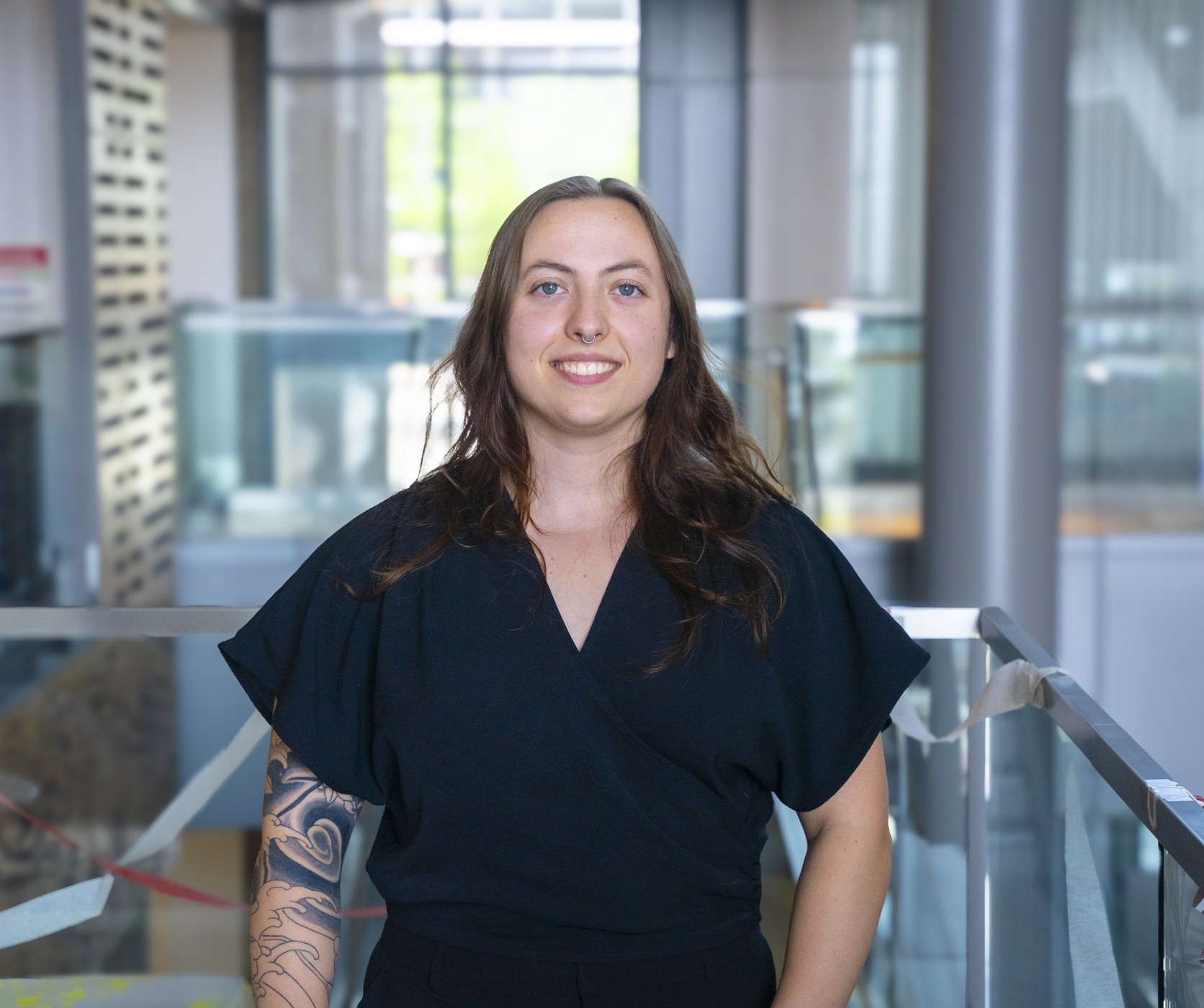
Zia L’Ecuyer, CEO, Eyescreen Inc.
Eyescreen’s system allows pharmaceutical companies to test their therapy to ensure that it will work in humans, before investing in expensive clinical trials. “If we can improve the success probability by a very, very small amount, it will be extremely useful commercially because very few drugs ultimately succeed,” said Vinberg. “But when they succeed, the windfall is massive. Even just a 1% improvement in that success probability is very valuable.”
However, developing the service platform for Eyescreen is only the starting point; the research needs to be further along to provide a service to pharmaceutical companies. “Our goal is to demonstrate that our system has better predictive value,” he said. “We are already trying to get early adopter customers who believe in us, because then we can create that data, which will demonstrate if our system is more predictive or not.”
After generating additional data to demonstrate the validity of its services and successfully providing its services to pharmaceutical companies, Eyescreen expects to apply for funding from the Nucleus Fund. “Once we can show interest from these companies, the Nucleus fund is likely to help us get going and begin our business,” said L’Ecuyer.
Eyescreen’s SBIR Phase I funding, which covered its proof-of-concept phase, runs out in March 2026. Phase II would cover commercialization, but the funding is currently frozen. “This is severely impacting small businesses,” said L’Ecuyer. “Phase II would have kept us going for another three years, but now we're looking at dilutive funding sources such as maybe VC or angel investors.” (Congress reached a compromise on the SBIR reauthorization bill on February 25. See this SSTI article for more details.)
Regardless of funding source, Vinberg remains determined to bring his innovation to market. “The main motivation for all of my career, for the past ten years, or even more, has been to help find new treatments that can save sight, because that's very, very important for people,” said Vinberg. “I think most people would rather lose a limb than their vision. And that's kind of the motivation behind this.”
Read Vinberg’s most recent paper here.