
Most startups begin rich in vision but poor in financial support. Some founders have been known to go to great lengths to advance what they know to be worthwhile project. Asklepios BioPharmaceutical (AskBio), established in 2001, survived its earliest days with the help of bake sales held by families whose children had muscular dystrophy and believed in the startup's potential to develop treatments for the condition. When Lindy Biosciences was founded in 2017, its founder was not financially compensated for her time. However, after early assistance from the North Carolina Biotechnology Center (NCBiotech), both companies now have market values measured in billions of dollars.
Contrary to what many in the innovation support community may think, some companies can navigate the proverbial “financial valley of death” from concept to commercialization without taking equity financing. NCBiotech’s financing tools show how.
When AskBio was founded, gene therapy was still considered an unreachable feat and an unworthy investment by many in the financial community. NCBiotech, however, was willing to take a risk in the company. Early work by co-founder R. Jude Samulski, Ph.D. and other business entities was supported by about $1 million in grants and loans from NCBiotech. The support included a $250,000 grant that helped recruit Samulski, the first scientist to clone AAV (adeno-associated virus), to the University of North Carolina at Chapel Hill School of Medicine from the University of Pittsburgh in 1993. He directed UNC’s Gene Therapy Center for 25 years.
Lindy’s founder, Deborah Bitterfield, Ph.D., studied at Duke University’s Needham Lab. After she graduated, she was making drug particles (microglassification) and trying to determine which drug-delivery applications the technology could support. Her first proof-of-concept data exceeded pharma industry expectations, so she moved forward to commercialize the application. She licensed the technology from Duke (David Needham, Bitterfield’s advisor at Duke, was the inventor) and started fundraising.
However, Lindy Biosciences’ dataset was not far enough along for the company to attract investors, so NCBiotech stepped in with a small loan. "The loan from NCBiotech was very critical in keeping the company going because it took a while to actually get real investment dollars in,” said Bitterfield. NCBiotech extended additional loans to the company in 2020 and 2023, which helped the firm demonstrate to potential investors that it could bring in capital. Even before the 2023 loan was fully paid out, the last requested from NCBiotech, the company had secured its first major licensing deal in 2024. At that point, Lindy Biosciences was able to repay all loans from NCBiotech.
When Lindy Biosciences and AskBio received financing from NCBiotech, they were among the 16-20 loans granted each year to early-stage life science and agriculture startups through NCBiotech's Emerging Company Development (ECD) team, which is led by Mike Carnes, vice president of ECD. NCBiotech’s investment portfolio includes over 120 active companies across therapeutics, medical devices, diagnostics, health IT, agtech, and other life sciences areas.
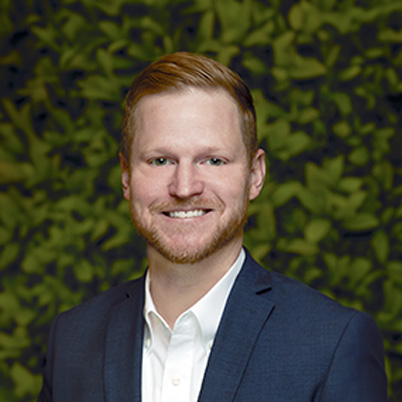
Mike Carnes, Vice President, ECD
NCBiotech
Bitterfield noted that the loan application process with NCBiotech is helpful for companies. "They go through a pretty extensive due diligence process before they approve a loan," she said. "That's a lot of talking through what we're using the funds for, what's the plan. Feedback on that is usually helpful once the loan is approved."
All companies that receive loans from NCBiotech are based in North Carolina, and historically about half of them are commercializing intellectual property developed at a NC university. The ECD team maintains visibility at universities across the state so that entrepreneurs are aware of the program and how it can help them.
Human therapeutics companies receive approximately 50% of these loans, med tech companies receive 30%, and industrial biotech and agriculture research tools companies receive 20%.
The ECD team consists of scientists and business professionals with good knowledge of industry, commercialization, and university tech transfer programs that coach and mentor entrepreneurs. They advise them on business, product development, and fundraising strategies. Additionally, ECD runs an Entrepreneur-in-Residence (EIR) program that provides startups with advice from seasoned, successful serial entrepreneurs.
ECD engages with the venture capital community to stay on top of trends and build relationships between portfolio companies and VCs to catalyze the flow of venture investment into North Carolina. Their efforts paid off in 2025, when North Carolina attracted a record $1.68 billion in VC funding, despite a significant nationwide downturn in VC investment.
The ECD team nurtures the state's startup ecosystem. They work with Duke University, the University of North Carolina at Chapel Hill, and North Carolina State University on Triangle Venture Day, a private gathering of startups and investors focused on therapeutics. The event, held in Research Triangle Park, featured nearly two dozen life sciences startups and academic labs presenting their discoveries, milestones, and plans to potential investors and strategic partners. Also, every other year, NCBiotech hosts the Venture Challenge, a statewide pitch competition in which regional winners vie for a $100,000 grand prize.
Bitterfield commented, "NCBiotech has been great to work with. They ask good questions, which is helpful for early-stage companies as they fine-tune their story for investors. There's a lot of that support that we get for being here and being a portfolio company of theirs. They're very supportive in trying to help the companies that they've invested in outside of just the loan itself.”
The deal Lindy Biosciences made in 2024 was an exclusive global licensing agreement and strategic collaboration with Novartis Pharma AG, a subsidiary of the Swiss medicines giant Novartis AG. "That deal was $20 million up front, and we had raised a little over $8 million over the life of the company," said Bitterfield. As the technology hits milestones, the funding could reach up to $934 million more. The company now has 19 employees. “We're still small,” she said, “but that's a pretty significant percentage growth for the company.
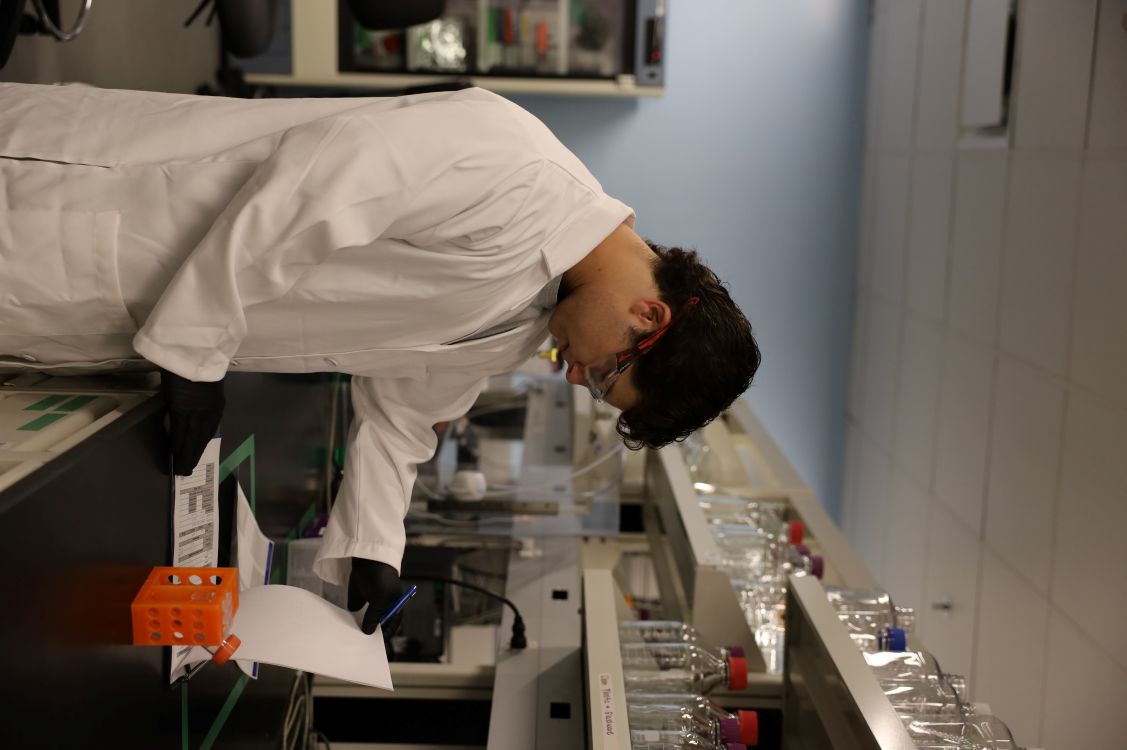
Jesse Morgan, Associate Scientist
Lindy Biosciences Labs. Jan. 2026
Photo credit: NC Biotech
AskBio was acquired by Bayer in 2020 for up to $4 billion. The company is headquartered in Research Triangle Park, North Carolina, where it continues to operate independently and employs more than 300 people. Far from its beginnings as a company pursuing a high-risk technology, today Samulski’s technological discoveries are considered essential components of all FDA-approved AAV drugs, including the first-ever U.S. FDA-approved gene therapy drug.
Since 1989, NCBiotech's ECD team has strategically deployed more than $66.5 million in loan funding to 290 startup life sciences companies. For every $1 NCBiotech has invested in its loan program; $124 in follow-on funding has been raised by companies, totaling $8.16 billion since the inception of the NCBiotech loan program in 1989.
The funding has led to significant economic development. About 60% of companies that received a loan are still active or have been acquired through M&A since 1989. There have been 47 exits of portfolio companies (M&A, IPO, etc.), a metric that is often used by equity investors to track success. Most of those companies remain in North Carolina: Only 14 of the 290 NCBiotech portfolio companies have left NC since 1989, and those were required to pay back the loan immediately. The program also creates lasting impact through company growth and job creation well beyond the initial investment, with 4,314 people employed by companies that received NCBiotech funding.
Read about the many successful companies in NCBiotech’s portfolio here.