Federal science & engineering support to universities declines
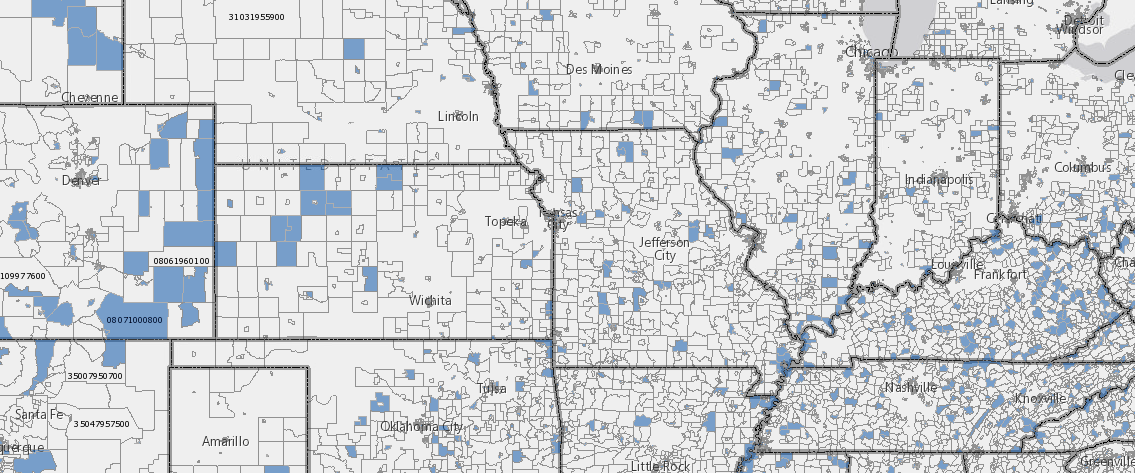
At least 1,016 academic institutions across the U.S. received federal support for a range of science and engineering functions in FY 2015, according to the latest survey from National Science Foundation. While the total was up slightly from the 1,003 institutions reported in the previous year, NSF also found that larger community divided a federal pie that was 3 percent or $900 million less than 2014, in constant dollars. The FY 2015 total figure of $27,747 million was 6 percent less than the 2012 total of $29,580 million, also in constant dollars.
A deeper dive into company valuations: the case of female-founders
Valuations of venture backed companies and the number of unicorns are rising based on the leading nationwide surveys, but closer examination of the data reveals not all startups are seeing the effect. The median valuation for female-founded companies, for example, was lower in 2017 (approximately $11 million) than it was in 2007 (approximately $15 million), according to research from PitchBook’s Dana Olson.
Valuations of venture backed companies and the number of unicorns are rising based on the leading nationwide surveys, but closer examination of the data reveals not all startups are seeing the effect. The median valuation for female-founded companies, for example, was lower in 2017 (approximately $11 million) than it was in 2007 (approximately $15 million), according to research from PitchBook’s Dana Olson. In comparison, the median valuation for male-founded startups has increased by approximately $8 million between 2007 (approximately $21 million) and 2017 (approximately $29 million). Olson also found that, across all industries, a much higher percentage of VC-backed, male-founded companies (35 percent) received at least one round of follow-on funding than female-founded companies (2 percent). With regard to exits, male-founded startups are acquired more than 11 percent of the time, while less than 0.5 percent of female-founded startups ever reach the same milestone. Male-founded companies also have a higher rate of IPO (nearly 1.7 percent) than female-founded startups (less than 1 percent).
Tech Talkin’ Govs 2018, part 7: LA, NH, NJ
The last of the governors’ state of the state addresses for this year have been delivered, and New Jersey’s governor presented his first budget address. SSTI has continued to review the addresses for news on TBED initiatives and presents excerpts of their addresses concerning such initiatives below. Louisiana’s governor is focused on addressing a fiscal cliff while preserving education gains in the state. New Jersey’s governor laid out a vision embracing green energy in the state and growing high school STEM-focused programs.
Before they were giants, federal S&T policy helped build Qualcomm and Broadcom
Citing national security concerns, the Trump administration made headlines this week when they ordered that chipmaker Broadcom stop pursuing its $117 billion bid for its largest competitor, Qualcomm.
Citing national security concerns, the Trump administration made headlines this week when they ordered that chipmaker Broadcom stop pursuing its $117 billion bid for its largest competitor, Qualcomm. While the current role of the federal government has captured attention, it is worth noting the contributions of federal and higher ed technology commercialization policies– themselves innovative at the time – to both companies’ origins: Qualcomm’s roots trace back to an SBIR award, while Broadcom is the result of a UCLA spinoff and generous entrepreneurial leave granted by the institution.
New index highlights digital divide across US counties
Between 2010 and 2015, job and establishment growth was substantially lower in U.S. counties where broadband is less available and technologies are less likely to be adopted, according to new research from the Purdue Center for Regional Development. To measure county-level digital divide, authors from the center developed the Digital Divide Index (DDI), which factors in demographics, jobs, and other establishment trends in the U.S.
GAO says R&D investment key to future competitiveness of country
The Government Accountability Office identified eight trends having strong effects on both the federal government and society as a whole, and those included in the science and tech section of the report are suggested to be critical to the country’s competitiveness.
The Government Accountability Office identified eight trends having strong effects on both the federal government and society as a whole, and those included in the science and tech section of the report are suggested to be critical to the country’s competitiveness. The trends are part of the larger 2018-2023 strategic plan for the office, whose mission is to ensure that Congress is aware and informed, and to help improve the performance and ensure the accountability of the federal government. The trends analysis outlines the current situation, key uncertainties and implications of each trend. In the area of science and technology, the GAO identified five emerging technologies that may transform society: genome editing; artificial intelligence and automation; quantum information science; brain/augmented reality; and cryptocurrencies and blockchain.
Maine voters approve $50 million in tech: Why it matters to all of us
Maine voters approved a special referendum on June 13 that will issue $50 million in bonds to fund investment in research, development and commercialization in the state’s seven targeted technology sectors. The Maine Technology Institute will distribute $45 million of the funds for infrastructure, equipment and technology upgrades. The remaining $5 million will be used to recapitalize the Small Enterprise Growth Fund to create jobs and economic growth by lending to or investing in qualifying small businesses.
Commerce sets new, hands-off direction for department
In a shift from its past economic development efforts, the U.S. Department of Commerce FY2018-2023 strategic plan would move the department to focus almost exclusively on being a commercial services entity. The plan’s points of emphasis are on streamlined permitting and regulations, with direct government activity primarily reserved for common good services — e.g., economic data, cybersecurity and IP protection.
Useful Stats: “Eds and Meds” employment by metropolitan area
As explored in last week’s Digest, the presence of Eds and Meds institutions can positively influence the levels of human capital in a region, but the need to keep costs low can hinder their overall growth. SSTI’s analysis subsequently found that employment in Eds and Meds industries increased in every state from 2005 to 2015. This article looks at Eds and Meds employment for the largest metropolitan areas in the United States. Mid-sized regions in the Northeast like Rochester, New York (4.4 percentage points), New Haven, Connecticut (2.9 percentage points), and Harrisburg, Pennsylvania (2.3 percentage points) experienced the largest growth in per-capita employment in Eds and Meds industries between 2010 and 2015.
Community banks driving small business formation, growth
As the U.S. Senate works toward a vote on a bipartisan bill targeted at lifting regulations for some banks, several studies published within the last year have looked at the impact community banks have had on serving small- to mid-sized businesses (SMBs) across the country. Historically, community banks have been the loan originator for nearly 60 percent of business loans made to SMBs and have served as drivers of economic growth and opportunity in rural and underserved communities. The reports highlight the impact of these community banks on small business lending pre and post Great Recession; the resiliency of SMB lending activities by these banks during the Great Recession; and policy recommendations to support community banking.
Illinois governor proposes $500 million match for public-private research institute
In an effort to support research collaboration among the state’s largest universities, Illinois Gov. Bruce Rauner’s proposed FY 2019 capital budget would provide $500 million for the University of Illinois Discovery Partners Institute in Chicago’s South Loop. The funds would serve as a state match for private donations from individuals, corporations, and other entities.
Interactive map highlights presence, limitations of broadband access
A new map of broadband access based on Federal Communications Commission (FCC) data offers a granular look at the internet options available to Americans. Based on data submitted by internet service providers through FCC’s Form 477, the map provides insight on the types and speeds of internet access available on a block-by-block basis across the country. Notably, the maps do not include information on the cost of internet service.
Michigan governor unveils $100 million “Marshall Plan for Talent”
Investments in STEM education, apprenticeship programs, and tech-focused tuition assistance are among a handful of proposals included in the “Marshall Plan for Talent” last Thursday. The plan includes $100 million in talent investments and utilizes a three-pronged approach to training by addressing K-12 education, higher education and the state’s existing workforce. The funds would come from savings due to a state bond refinancing, according to the governor.
Useful Stats: Employment in “Eds and Meds” by state
For decades, state and local economies have leaned heavily on their anchor institutions during times of economic uncertainty and transition. An analysis finds that total employment in “Eds and Meds” industries increased in every state from 2005 to 2015. This article breaks down the growth and geography of Eds and Meds employment at the state level, while next week’s issue of the Digest will explore this data by metropolitan area.
Policymakers leverage public libraries to promote innovation
For hundreds of years, libraries have helped drive American innovation by serving as a trusted resource and providing information to a wide range of individuals. As libraries continue to implement their own initiatives in this space, policymakers across the country have recently turned to them as a way to level the playing field around workforce development and entrepreneurial support.
Growing strain on global systems heightens risks
The World Economic Forum’s (WEF) latest survey of more than 1,000 experts and decision makers on the likelihood and impact of 30 global risks over a 10-year period found four areas of concern: environmental degradation; cybersecurity breaches; economic strains; and geopolitical tensions. Despite experiencing a year-long global economic recovery, the survey revealed that respondents are pessimistic about the year ahead (59 percent say they expect an increase in risk for the year, compared to 7 percent who expect declining risks).
Tax update: Many economic development grants are now taxable income
The tax law signed at the end of last year introduced a provision that will significantly affect many economic development offices and related nonprofits across the country: “contributions to capital” will now typically be included in a corporate taxpayer’s gross income. Previously, grants, free land and certain types of tax credits from governmental units or civic groups to support capital expenses were tax-free awards for the beneficiary. Since the signing of the bill, many of these awards are now taxable.
Recent reports highlight new findings on educational attainment
Three recent news items shed important light on educational attainment and economic well-being and one promising approach to increasing educational attainment among lower income people. While the Pew Research Center finds the share of college-educated young adults in the U.S. workforce is higher than ever before, the Economist reports that the “return on investment” in getting a college degree is leveling off.
SBIR hits the road with funding opportunities for entrepreneurs
The U.S. Small Business Administration has announced its 2018 road tour connecting entrepreneurs with next generation R&D ideas to early stage funding led by the SBA’s Small Business Innovation Research and Small Business Technology Transfer programs. Each stop in the 18-state road tour will be hosted by a local organization, and program managers from the 11 participating federal agencies will conduct one-on-one meetings with attendees, take part in targeted panels, and share insights into how their agencies make funding decisions.
Five takeaways from the administration’s FY 2019 budget
The White House released a budget this week that would substantially reduce federal spending for innovation and entrepreneurship. Regional Innovation Strategies and the entire Economic Development Administration, Manufacturing Extension Partnership, Advanced Research Projects Agency – Energy, Innovative Technology and Advanced Vehicles loan programs, Growth Accelerator Program and Regional Innovation Clusters would all be eliminated.
The White House released a budget this week that would substantially reduce federal spending for innovation and entrepreneurship. Regional Innovation Strategies and the entire Economic Development Administration, Manufacturing Extension Partnership, Advanced Research Projects Agency – Energy, Innovative Technology and Advanced Vehicles loan programs, Growth Accelerator Program and Regional Innovation Clusters would all be eliminated. Only in an addendum related to last week’s budget deal does the administration suggest funding workforce and several agencies’ R&D at or near FY 2017 levels. Still, whereas the previous two budgets featured nearly-universal cuts to non-defense initiatives, the FY 2019 budget provides better insights into the administration’s priorities.
Keeping pace with the needs of a skilled workforce
If the U.S. is going to continue to compete globally and win on innovation, more workers will have to attain credentials allowing them to keep pace with the demands of the shifting workforce, say several recent reports. However, only a quarter of the states have more than 50 percent of their prime working age population attaining some kind of credential beyond high school according to a new study from the Lumina Foundation.
If the U.S. is going to continue to compete globally and win on innovation, more workers will have to attain credentials allowing them to keep pace with the demands of the shifting workforce, say several recent reports. However, only a quarter of the states have more than 50 percent of their prime working age population attaining some kind of credential beyond high school according to a new study from the Lumina Foundation. A new Brookings analysis finds that 15 percent of young people are “disconnected,” meaning they do not have a job and are not in school. To meet the demands that the work of the future will entail, Lumina advocates that 60 percent of those aged 25 to 64 have some credential beyond high school by 2025 (the current national average is 46.9 percent).
Canadian government announces winners of C$950 supercluster initiative
While the United States grapples with yet another proposed budget that drastically reduces investments in innovation, Canada’s federal government has announced that five industry-led organizations will share up to C$950 million as part of the country’s supercluster initiative.
While the United States grapples with yet another proposed budget that drastically reduces investments in innovation, Canada’s federal government has announced that five industry-led organizations will share up to C$950 million as part of the country’s supercluster initiative. The superclusters program, a part of the Trudeau government’s innovation and skills agenda announced last year, seeks to encourage leaders from business, research institutions, and the public sector to support the growth of targeted industry sectors. Other elements of the strategy include investments in venture capital, entrepreneurship, and collaborative R&D projects. Although there were originally nine semi-finalists for the superclusters awards, many of the losing bids ended up joining forces with the five winning initiatives:
Tech Talkin’ Govs 2018, part 6: AR, CT, ME, WY look to boost economies
SSTI’s Tech Talkin’ Govs feature continues as governors across the country are wrapping up their state of the state addresses. We review each speech for comments relevant to the innovation economy, and bring you their words directly from their addresses.
In this latest installment of Tech Talkin’ Govs, Arkansas is celebrating its low unemployment while Maine says it will focus on a commercialization bond and grow the workforce in part through a student debt relief program. Connecticut wants new goals for clean energy and Wyoming’s focus on economic diversification continues with the governor there calling for full funding for the ENDOW initiative.
Turning blockchain from hype to reality, NIST report
The National Institute of Standards and Technology (NIST) released a new 59-page draft report – NIST Interagency Report (NISTIR) 8202: Blockchain Technology Overview – that attempts to move beyond the recent hype surrounding Bitcoin and other digital currencies (or cryptocurrencies) to
The National Institute of Standards and Technology (NIST) released a new 59-page draft report – NIST Interagency Report (NISTIR) 8202: Blockchain Technology Overview – that attempts to move beyond the recent hype surrounding Bitcoin and other digital currencies (or cryptocurrencies) to help businesses and others understand what the blockchain is and decide whether it would be an asset to their products. Dylan Yaga, a NIST computer scientist and one of the report’s authors, also hopes that the report will provide readers with a picture of blockchain that is not skewed to any players’ interests and is easily understood from an unbiased front.
Tech Talkin’ Govs 2018, part 5: IL, OK, OR, PA, TN looking to enhance workforce, build economies
Governors are continuing their annual address to legislators and constituents and workforce development continues to take center stage, with the governor of Oregon rolling out a new five-step plan she hopes will invigorate the economy and close the skills gap while Oklahoma acknowledged difficult times and Tennessee says it may achieve an education goal two years ahead of schedule.